In April, we decided to reinforce our bedroom floor, which had been creaky and worryingly moved when walked on. Even our dogs caused the floor to bounce when walking on it. Along with replacing the floor, we considered restoring the original fireplace in the bedroom. However, as with most projects on our house, things didn’t go as planned.
The first step was to cut a hole in the plasterboard covering the back of the fireplace. We discovered that the metal flue would be an obstacle to our plans. Because of this, we abandoned the idea of a working fireplace. Instead, we opted for Plan B: using brick slips and roof tiles that came from a property in Hungary. This post covers my experience with lime cement, brick slips, and floor tiles, an entirely new DIY experience for me. Like other posts, I’ll also give a comparison to building software solutions.
Comparison to software system projects
You’re probably asking yourself – how can you compare a fireplace restoration to building software solutions. It’s a stretch. But, it relates to setting goals and understanding what the requirements are to achieve those goals. It also involves understanding the cost/benefit to decide on what can be achieved.
The goal was to restore to working order, the master bedroom fireplace while keeping the cost to less than £1,000. Like software systems this gave an understanding of the expected outcome and budget – the definition of success. When thinking about software project priorities and impact, consider the Cost of Delay. It is also important to evaluate the Return on Investment. Determine if a project is mandatory as well.
Cost of delay
This concept refers to the potential negative consequences and financial impacts that result from postponing a project or decision. In project planning, the cost of delay can include lost revenue, missed opportunities, and increased expenses. For example, delaying a product launch can mean losing market share to competitors. It could also mean failing to capitalize on a seasonal demand. In maintaining a house, the cost of delay can be seen in the escalation of minor issues into major repairs. For instance, not fixing a small roof leak promptly could result in extensive water damage, ultimately leading to more expensive repairs.
Understanding the cost of delay is crucial for prioritizing projects effectively. It helps in assessing the urgency and importance of a project and in making informed decisions about resource allocation. By calculating the cost of delay, project managers and business leaders can balance risk and reward to optimize project outcomes.
Maintaining a house can be compared to this; for instance, not fixing the roof promptly could result in leaks that are more expensive to repair later. The fireplace project had no significant cost of delay. It was simply more convenient to complete before new carpets were installed.
Return on investment
In the context of our fireplace restoration project, “return on investment” (ROI) refers to the potential benefits that could be gained from the expenses incurred. For instance, making the fireplace functional and aesthetically pleasing could increase the value of our property, enhancing its appeal to potential buyers. However, since we have no plans to sell the house soon, the immediate tangible financial ROI is minimal.
In software projects, ROI is a crucial metric. It evaluates the profitability or value generated from an investment. This evaluation is in relation to its cost. This could relate to various factors. These include productivity improvements, the creation of new products or features, or enhanced customer satisfaction. For example, investing in a new software feature might lead to increased sales, higher customer retention, or reduced operational costs.
ROI is often observed over a span of years, leading project managers to consider the payback period – the time it takes for an investment to generate enough profit to cover its initial cost. This period is significant in determining the viability and prioritization of projects.
In recent times, particularly post-COVID, many companies have shifted their focus from mere growth to profitability. Prior to this, many growth-focused companies prioritized scaling and market share over immediate profits, often relying on external investments to fuel their expansion. However, the pandemic-induced economic challenges have necessitated a pivot towards achieving profitability and sustainable business models.
Understanding ROI is essential for making informed decisions about resource allocation and project prioritization. It aids in balancing the risks and rewards associated with various initiatives, ensuring that investments align with organizational goals and deliver value over time.
Just do it (mandatory projects)
Mandatory projects are often non-negotiable and driven by regulatory requirements, security needs, or necessary system upgrades. These projects must be completed to ensure compliance, safeguard data, or maintain operational continuity. Although they might not directly contribute to business growth or profitability in the short term, failing to execute them can result in severe penalties, security breaches, or system failures that could jeopardize the entire business.
Understanding and managing mandatory projects is crucial for businesses. These projects often necessitate reallocating resources and adjusting timelines for other initiatives, impacting overall business plans. However, their successful completion ensures the organization remains compliant, secure, and operational, ultimately supporting long-term business stability and success.
My fireplace project decision
In the case of the fireplace restoration project, an initial assessment revealed that achieving full functionality within the set budget was unfeasible, particularly due to the high costs associated with modifying the flue system. Consequently, the project’s focus shifted to enhancing the fireplace’s aesthetic appeal rather than restoring its functionality. By adhering to the budget, the project still added value to the property, albeit in a different manner than initially intended.
I’d be interested to know if anyone wants to hear my thoughts on the different leadership thinking required for growth and profit-driven organizations. I can also share how that impacts project planning and prioritization.
Our Fireplaces
If you’re interested here’s a quick rundown on the fireplaces in the house. There are four of them, with only one in working order.
The first, and most interesting fireplace is the original untouched 1620’ish fireplace. It has the original bricks, including soot stains and the original oak beam. This would have been used for cooking as well as heating.

The second fireplace is a rebuild done in the 1980’s. This fireplace prevented the restoration of the bedroom fireplace. It is a working open fire. The oak beam is old; it has wooden pegs, which indicate the age and used to construct our house. I doubt the oak bean is original to the fireplace though. It does make for a cosy winter evening as the fire tends to warm up multiple rooms.

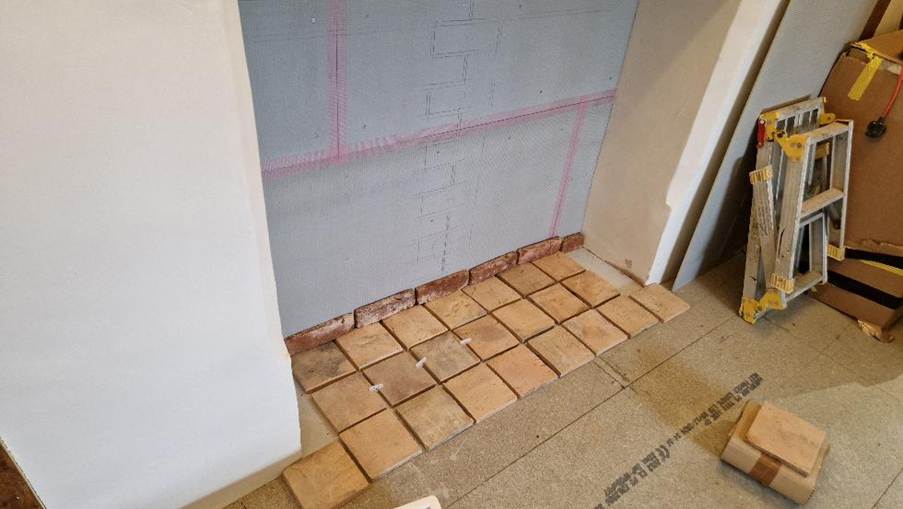
The master bedroom update did require some work and careful planning for how to lay out the bricks and tiles. I did the whole project, laying out the brick slips, lime cement mixing and the pointing of the bricks. I didn’t realise how physically hard it would be. I was in a stress position, bent over in a awkward space for about 4 hours when pointing the bricks. Laying and pointing the tiles was slightly easier on the back but not the knees.
I spent a significant amount of time measuring and laying out the position of the brick slips. I also did trial layout of the floor tiles. This was to ensure a layout that would reduce waste and also give a look that reflects the history of the house.
Overall, including time to allow cement to dry, this project took 3 days was completed well within the allocated budget.
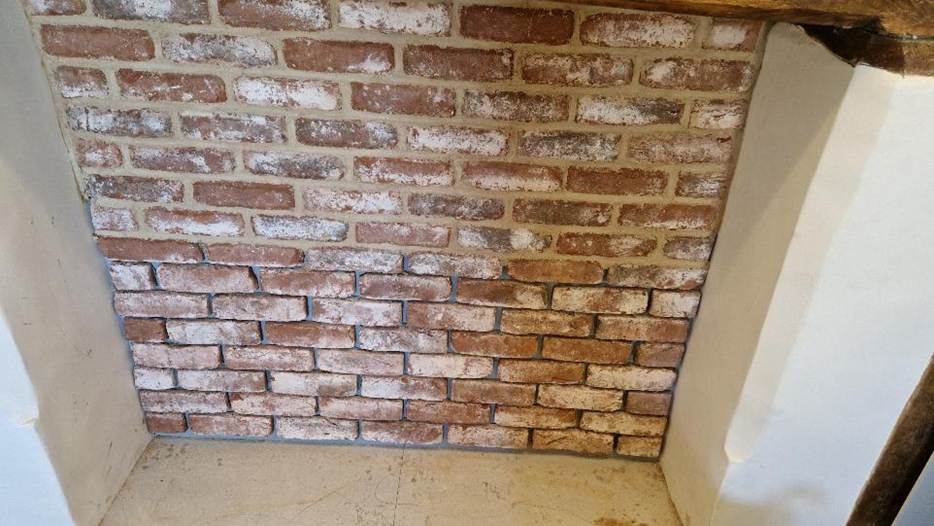
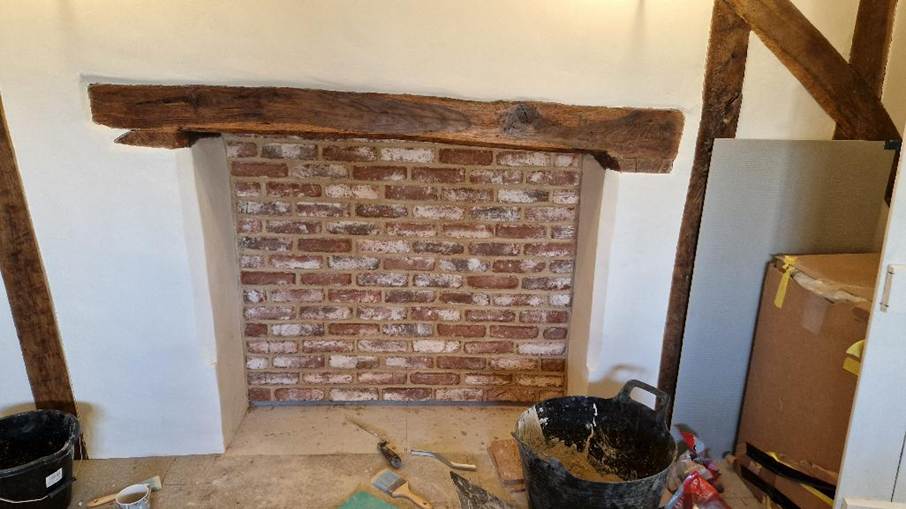
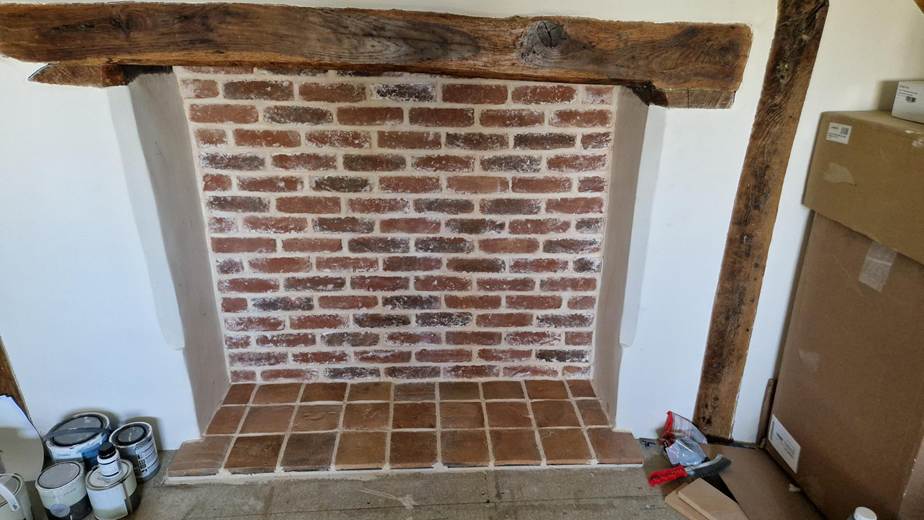
The final result being….

The next posts
- Using AI to translate instructions from a retro board game into a computer game. I want to see if this can be done in Python and Go and then scale this to a multi player solution.
- Building Financial Systems – specific solutions vs abstract extensible platform solutions. This is likely to be a series of posts, covering some of my experience of building financial software solutions for collateral management, video accounting treatments, FX trading, anti-money laundering and food delivery.
Other blog posts that have caught my eye
Interestingly, a couple of other blog posts have recently appeared recently which touch on tech, farming and gardening.
- The Last Commit: How Programmers Engineered Their Own Unemployment . I need to give my thoughts and reply to this post.
- It’s Not Debt, It’s a Garden . Thought provoking, and I definitely need to reply to this one as it is a good discussion topic. I will reply to the post in the next few days. I don’t agree with the analogy as debt is a business risk. Tech debt, and functional debt, should also be a business decision. Weeds growing in your garden isn’t always a choice, it just happens. I do agree with ongoing upkeep and maintenance but cost/benefit must be considered.
 Gary Thompson Random Thoughts
Leave a comment