AI, Global Scaling, Regulatory Compliance, and Multi-Tenancy in Two Distinct Domains
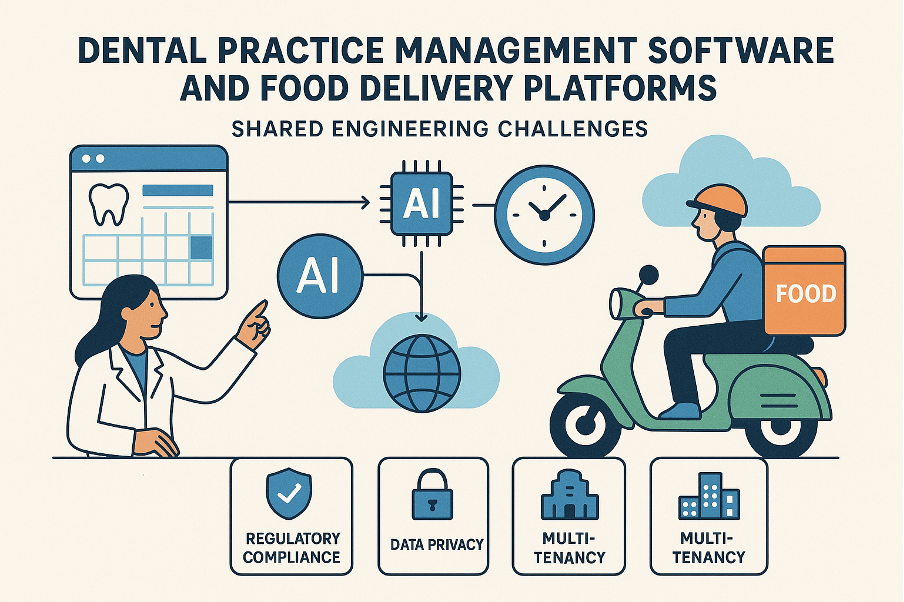
TL;DR: This blog post compares dental practice management software and food delivery platforms, highlighting shared engineering challenges such as AI-driven scheduling, global scaling, regulatory compliance, data privacy, and multi-tenancy. It explores how AI optimises both dental appointments and rider dispatch, the need for adaptable and scalable cloud architectures, and the importance of designing systems that address efficiency, fairness, and local regulatory requirements across both B2B and consumer applications.
Introduction
Three months have flown by at Henry Schein On (Dentally). I decided to do a little reflection. Changing business domain has shown me that the same challenges and discussions exist – it’s still software. Engineers worry about technical debt; product managers worry about how quickly the new functionality can get to mark. I thought I would focus on design challenges and AI though, it’s neutral territory.
Oh, and a side note. I’ve been enjoying coding again using Python, Cursor and/or GitHub Copilot and here’s how my GitHub profile looks:
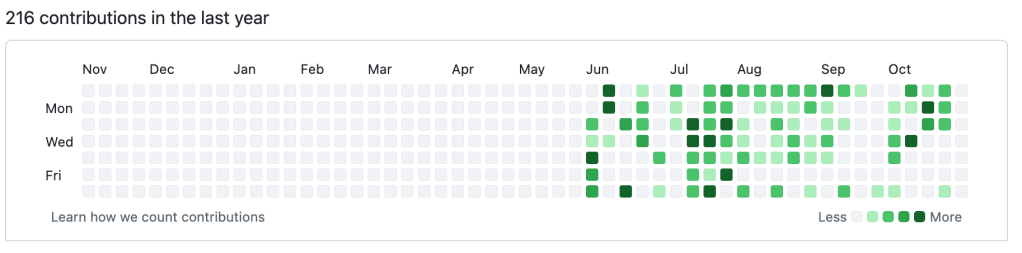
I’ll share more about my experience about building a DORA tool and writing a game in Python later.
Anyway……
In the evolving world of software engineering, cross-industry comparisons often yield valuable insights into system design, scalability, and regulatory considerations. Dental practice management software and food delivery platforms may appear unrelated at first glance, yet both domains share underlying engineering challenges—particularly in scheduling, compliance, data management, and privacy. This blog post explores these parallels, focusing on how artificial intelligence (AI) enhances scheduling, the complexities of scaling systems globally, navigating diverse regulatory landscapes, managing customer data, and implementing robust multi-tenancy for privacy and security. The aim is to support software engineers and architects seeking to design resilient, compliant, and scalable platforms for business-to-business (B2B) and consumer applications.
AI in Scheduling: Dental Appointments vs Delivery Rider Dispatch
Efficient scheduling is the backbone of both dental practices and food delivery services. In dental software, AI-driven scheduling tools analyse practitioner availability, patient preferences, treatment durations, and equipment constraints to optimise appointment slots. These systems must handle recurring visits, cancellations, and emergency bookings with minimal manual intervention, improving both clinic efficiency and patient satisfaction.
Conversely, food delivery platforms use AI to dispatch riders, factoring in real-time traffic, restaurant preparation times, rider locations, and delivery windows. The system must dynamically adjust to fluctuating demand and unforeseen disruptions, such as weather or road closures. The underlying optimisation algorithms—be they constraint satisfaction, reinforcement learning, or predictive analytics—share common principles but are tailored to the domain’s unique operational needs.
In both scenarios, AI not only automates complex scheduling decisions but also learns from historical data to improve future outcomes. For engineers, the challenge lies in designing models that balance efficiency, fairness, and user experience while remaining transparent and explainable.
Scaling for Global Usage: Challenges and Solutions
Scaling software for global reach introduces myriad technical and operational hurdles. Dental practice systems expanding internationally must support local languages, currencies, and healthcare standards, while accommodating varying appointment lengths, insurance protocols, and patient record formats. Similarly, food delivery platforms must adapt to diverse payment methods, local cuisines, and logistical infrastructures.
Both domains require robust cloud architectures capable of elastic scaling, regional data storage, and high availability. Geo-distributed microservices, content delivery networks, and edge computing are commonly employed to reduce latency and ensure compliance with data residency requirements. Engineers must also design for peak-load scenarios—such as lunch hours for food delivery or seasonal spikes in dental bookings—without compromising system performance.
Moreover, global scaling necessitates a modular approach, allowing for rapid localisation and integration with third-party providers, from insurance databases to restaurant point-of-sale systems. Feature flags, configuration-as-code, and continuous deployment pipelines further streamline the rollout of region-specific features.
Regulatory Compliance: Tax, Food Safety, and Dental Treatment Regulations
Regulation is a significant differentiator between dental and food delivery platforms. Dental software must comply with medical privacy laws (such as GDPR and HIPAA), clinical safety standards, and often complex billing rules involving government or private insurers. Food delivery platforms, meanwhile, contend with food safety regulations, hygiene certifications, and tax compliance across multiple jurisdictions.
For engineers, this means designing systems with configurable compliance modules. Rule engines can automate the application of local tax rates or verify practitioner credentials, while audit logging and access controls safeguard sensitive data. Compliance as code—embedding regulatory logic within the software—enables rapid adaptation to new laws and minimises legal risk.
Proactive compliance monitoring and automated alerting further ensure that the platform remains up to date with evolving standards. Regular security assessments and third-party audits are essential for maintaining trust and avoiding costly breaches or fines.
Customer Management: Data Handling and User Experience
Both dental and food delivery platforms manage sensitive customer data, from personal details and payment information to health records or dietary preferences. Ensuring data integrity, security, and privacy is paramount, not only to comply with regulations but also to foster user trust.
User experience (UX) considerations vary: dental systems must support long-term patient relationships, recurring treatments, and detailed record-keeping, while food delivery apps prioritise speed, convenience, and seamless ordering. In both cases, clear consent flows, robust authentication, and transparent data usage policies are essential. Engineers should employ encryption in transit and at rest, alongside fine-grained access controls to limit data exposure.
Additionally, effective customer support tooling—such as chatbots, appointment reminders, or order tracking—can be powered by AI to enhance UX and reduce operational overhead.
Multi-Tenancy and Privacy: Ensuring B2B and Customer Data Isolation
Multi-tenancy—the ability to host multiple clients (dental practices or restaurants) on a single platform—presents unique engineering challenges. Each tenant requires strict data isolation to prevent cross-client access while sharing core infrastructure for efficiency.
In dental practice management, this might mean segregating patient records, appointment logs, and billing data by clinic. In food delivery, restaurants, delivery partners, and end customers must have their data securely partitioned. Approaches include database-per-tenant, schema-based isolation, or row-level security, each with trade-offs in complexity and scalability.
To further protect privacy, engineers should implement tenant-aware authentication, encryption keys per tenant, and comprehensive monitoring for unauthorised access attempts. Regulatory requirements often mandate detailed audit trails and rapid incident response capabilities, which must be baked into the platform from the outset.
Conclusion: Key Engineering Takeaways and Future Directions
Despite their differences, dental practice management systems and food delivery platforms share a core set of engineering challenges: optimising scheduling with AI, scaling reliably across regions, navigating regulatory complexity, safeguarding customer data, and ensuring robust multi-tenancy. Success in either domain depends on a thoughtful blend of domain expertise, technical architecture, and a proactive approach to compliance and privacy.
Looking ahead, advances in AI explainability, edge computing, and privacy-preserving technologies (such as differential privacy and confidential computing) promise to further align best practices across industries. For engineers and architects, embracing cross-domain lessons can inspire innovative solutions and foster more resilient, user-centric platforms.
 Gary Thompson Random Thoughts
Leave a comment